
Are You a Firehose or an Irrigation System?
Recently I've been thinking about firehoses, irrigation systems, and meeting the needs of the world.

I started thinking about how, as different as they are, both firehoses and irrigation systems are very good things.
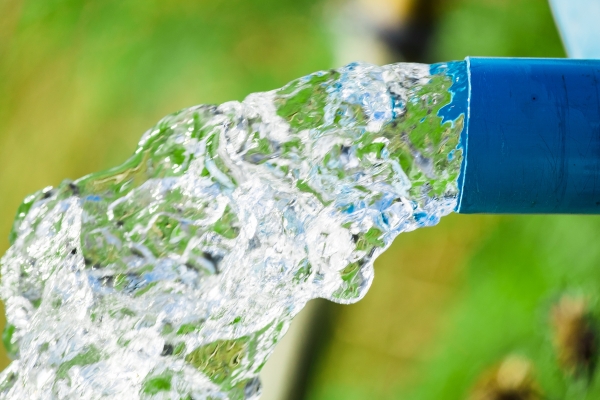
If you have a fire in your house, you want a firehose sending water your way. You've got an emergency, and you need immediate help.
If you live in a dry area like Colorado, where I'm from, or Jordan, where I now live, you know that irrigation is essential. Without water provided, farmers couldn't grow the crops we need for food.
So, how do firehoses and irrigation systems relate to meeting the world's needs?
Sometimes we need methods that are like firehoses. We have to address an immediate crisis by pouring out resources and skills to save lives. As fires have ravaged the western U.S., Beirut, and the Moria refugee camp in Greece, the first order of business is immediately putting out the fire and guaranteeing the safety of people.
Sometimes we need methods that are like irrigation systems. The needs are long-term. After the crisis, we need to rebuild. People need food, so farmers need to grow crops, and for this, they need water. Helping meet these needs takes long-term, systematic strategies. We have to consider what will lead to sustainable development and the meeting of future needs.
Firehoses and irrigation systems are both good, but they are different. It's these differences I've been considering as I look at the needs around me and try to figure out where I'm called to serve.
Firehoses and irrigation systems address needs with different timeframes.
A firehose addresses an immediate crisis. Irrigation provides water for the delayed positive benefit of abundant crops. In the same way, I have to assess whether a need is a crisis that requires emergency relief or if the need requires the development of slower, consistent interventions. Should I distribute food to people who have none? Or should I work with a project to help educate kids who can go on to thrive and develop their communities?
Using the wrong tool to meet a need can cause more damage. If you try to put out a house fire using drip irrigation methods, the house would be long gone before there was enough water to put out the fire. On the other hand, if you watered a reseeded hillside with a firehose, it would wipe out the new plants, create further erosion, and lead to a shortage of needed food. I need to match the tools I use with the needs I'm addressing.
The people who are most effective using firehoses and irrigation systems have received specialized training. I'm not a firefighter, so while I can effectively use a fire extinguisher to put out a small wastepaper fire, I would not do a good job saving a forest. And, while in theory I can plant a small garden, I know I can't scale up to grow what's needed to feed the inhabitants of a city. (True confession: most plants in my care die. So even a small garden may be beyond my abilities.) I need to look for where my training, skills, and gifting will be most effective.
I believe all of us are called to address the ever-present and growing needs that are so obvious in 2020. Some of us will use firehoses, stepping in to deal with immediate crises. Others of us will use irrigation systems, helping communities grow and thrive for the long term. Both are important; both are needed.
Can you wield a firehose or build an irrigation system? Whatever your skills, training, and gifting, know that you are called to be part of meeting the world's needs. Click here to explore how your skills and passions can meet the world's needs!
About the Author: Libby is an IDEAS Associate and professional librarian. She currently resides in Jordan and works with libraries in the Middle East, Africa, and Asia. Enjoy other blogs by Libby, such as Facing My Expat Privilege.
A word from Gabrielle
Why your gift matters
Your gift empowers Reclaim to bring lasting hope and removes barriers so that people around the world can experience the fullness of their God-given dignity!
Together, we can work to provide marginalized individuals and vulnerable communities the opportunity to live flourishing, abundant lives.
Thank you for your partnership!
Above: Tikal, Guatemala
Where we work

PO Box 630027
Littleton, CO 80163
Registered as Desta
EIN: 36-4160878

